

Buy Ethically Made Australian Swimwear Online
Table of Contents
- What Makes Australian Swimwear Truly Ethical?
- Sustainable Swimwear Brands Australia: What to Look For
- Shop Ethically Made Australian Swimwear at Dekota Swim
- How to Care for Eco-Friendly Swimwear
- Frequently Asked Questions
Last Updated: August 24, 2026
What Makes Australian Swimwear Truly Ethical?
Ethical swimwear is defined by three concrete pillars: sustainable fabrics, ethical manufacturing, and garment longevity.
Sustainable fabrics use materials like recycled nylon, recycled polyester, or REPREVE fibres sourced from recycled plastic bottles and fishing nets. These reduce textile waste and lower carbon footprint compared to virgin synthetics.
Ethical manufacturing means fair wages, safe working conditions, and supply chain transparency. Certifications like B-Corp provide verification, but credible brands publish supply chain information publicly.
Garment longevity is often overlooked. Chlorine resistance, UV protection, and colourfast construction separate ethical swimwear from fast fashion with a green label.
Sustainable Swimwear Brands Australia: What to Look For
Check the fabric certification. ECONYL recycled nylon from fishing nets and REPREVE recycled polyester are among the most traceable materials. Ask whether the brand names its fabric supplier and whether that supplier holds recognised certification.
Verify manufacturing claims. "Designed in Australia" and "made in Australia" are not the same. Designed locally but manufactured offshore can still reflect strong ethics if the brand discloses factory partners and audits labour conditions. According to Australian Competition and Consumer Commission guidance on country of origin labelling, businesses making "made in Australia" claims must meet specific criteria under Australian Consumer Law.
Look for circular fashion commitments. Take-back schemes, recycling programs, and biodegradable packaging signal brands thinking beyond the point of sale.
Size inclusivity matters. Ethical fashion includes flattering construction for diverse bodies.
| What to Verify | What to Ask | Why It Matters |
|---|---|---|
| Fabric origin | Named supplier + certification | Confirms recycled nylon or REPREVE claim |
| Manufacturing location | Factory name + audit records | Distinguishes design from production ethics |
| End-of-life options | Take-back or recycling program | Closes the circular fashion loop |
| Packaging | Biodegradable or recycled materials | Reduces shipping emissions and waste |
| Size range | Full size inclusivity | Reflects broader ethical values |
Shop Ethically Made Australian Swimwear at Dekota Swim
Dekota Swim is built on the principle that quality and ethics are the same standard. The collection is designed in Australia with timeless silhouettes, flattering construction, and durable eco-friendly materials built to outlast a single season.
Real customers confirm this. Emma R. says she "absolutely loves the colour and fit." Sophia W. notes the Lyra Pink bikini "fits like a dream." Amelia B. gets compliments every time she wears her Maya Flower Field bikini.
Current pieces include:
- Brooklyn Bikini - Bleue ($120), a floral print with clean lines
- Solana Bikini - Limoncello Dot ($120), a playful dot print
- Brooklyn Bikini - Fleurs ($120), a feminine floral option
- Solana Bikini - Rosé Stripe ($120), structured support for active beach days
At $120, you are paying for durable construction that resists chlorine and UV degradation, ethical manufacturing standards, and timeless design. That is the real cost of slow fashion done properly.


How to Care for Eco-Friendly Swimwear
Sustainable swimwear only stays sustainable if it lasts. The most common reason quality pieces fail early is improper care.
- Rinse immediately after wear. Salt water, chlorine, and sunscreen degrade fabric integrity.
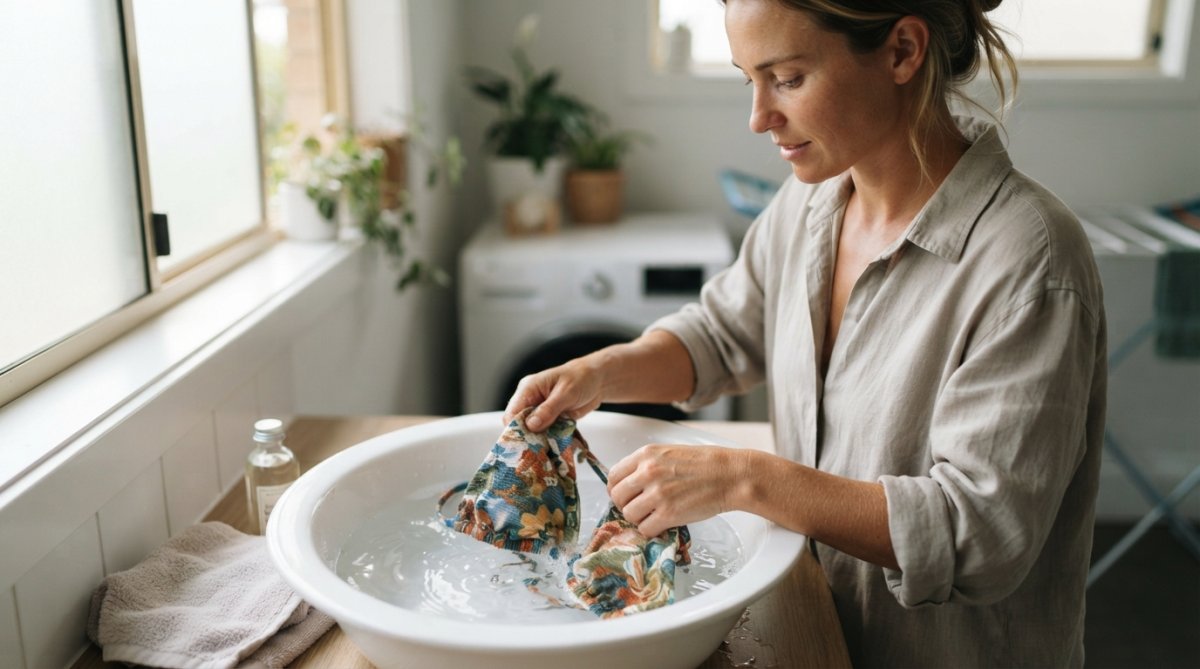
- Hand wash with gentle detergent. Machine washing accelerates fibre breakdown.
- Never wring or twist. Press water out gently to protect elastane fibres.
- Dry flat in the shade. Direct sunlight degrades fabric. Drying flat prevents stretching.
- Rotate between pieces. Wearing the same piece daily prevents fibres from recovering their shape.
According to Australian Textile, Clothing and Footwear industry guidance on garment care, proper care labelling is mandatory on garments sold in Australia. Always check the care label on your specific piece.
A piece that lasts three or four summers instead of one reduces your personal contribution to textile waste more than switching brands every season ever could. For further context, the Australian Government's sustainability resources for consumers provide guidance on reducing the footprint of clothing purchases over time.
Frequently Asked Questions
How can I verify if a swimwear brand is truly Australian made?
Check whether the brand discloses where garments are cut, sewn, and finished. Genuine Australian-made claims should be backed by information about the specific facility or region. Look for fair wages disclosures, ethical labour standards statements, and third-party certifications such as B-Corp. If a brand only says 'designed in Australia' without mentioning manufacturing, the garments are likely produced offshore. Ask directly before you buy.
Are recycled fabrics like recycled nylon actually durable in swimwear?
Yes, when produced to a high standard. Recycled nylon sourced from discarded fishing nets or post-consumer waste, such as Repreve, performs comparably to virgin nylon in chlorine resistance, UV protection, and stretch retention. The key is fabric weight and construction quality. Thin, poorly finished recycled fabrics will degrade quickly. A well-made piece using recycled nylon should hold its shape and colour across an entire summer of regular wear.
How do I identify greenwashing in the swimwear industry?
Greenwashing usually appears as vague language: 'eco-conscious', 'nature-inspired', or 'planet-friendly' without specifics. Genuine sustainable swimwear brands name their fabrics, certifications, and supply chain partners. They explain how garments are made, not just marketed. Biodegradable packaging, supply chain transparency reports, and end-of-life recycling programs are concrete signals. If a brand cannot answer where and how a garment was made, treat sustainability claims with scepticism.
The real challenge with buying ethically made Australian swimwear online is cutting through the greenwashing to find pieces that actually deliver on their claims. Dekota Swim was built to answer that challenge directly, with Australian-designed swimwear focused on flattering fits, durable eco-friendly materials, and honest construction. Browse the full collection and find the piece that earns its place in your capsule wardrobe. Shop All at Dekota Swim.
This article was written using GrandRanker